Burnout prevention for organizations
Everyone is working. It still feels off.
Nobody is failing. Nobody is complaining out loud. But the team is tired in a way a long weekend does not fix, and good people keep leaving. That feeling has a cause. We find it with real data, then stay while the fix takes hold.

Welcome back
The 60-second check
How does it look from where you sit?
Research points to six areas of work that drive burnout. Rate your team on each one, and you will see where to look first.
What we do
Find the cause. Fix it. Stay while it holds.
Start with the whole picture, or with one team, one workshop or one person, then decide what comes next from the result.
Most work is scoped after a free 25-minute call and priced in writing before you commit. For one question or topic, a consulting hour is $250 plus a 1% booking fee, credited toward the project if it grows into one. Reschedule or cancel it up to 24 hours ahead for a full refund.
Book a free 25-minute call
Assess
Burnout and retention assessment
A confidential survey and interviews across every seat, then a report with clear priorities and a baseline you can measure against later.
How an engagement runsListen
Exit and transition interviews
Honest talks with people who are leaving or changing roles. We are outside your organization, so people speak more freely.
What’s included
- Confidential interviews by phone or video, or in person in Honolulu
- Patterns across departures, not one-off stories
- Recommendations aimed at keeping your best people
Build
Resilience and leadership training
Workshops, keynotes and supervisor training, in person or online. Topics include resilience, trauma-informed leadership, communication and cultural humility.
What’s included
- Half-day and full-day workshops
- Keynotes for conferences and all-staff events
- Supervisor training: supporting a team without burning out yourself
- Topics include communication and conflict, cultural humility, and military-to-civilian transitions
Measure
Program evaluation
Surveys and mixed-methods studies that set a baseline and show what changed, for leaders, boards and funders.
See program evaluationFor one person
Phoenix Protocol, funded by the employer
Some people need more than a workshop. Employers and departments can fund Phoenix Protocol, our six-month burnout program, for one person at a time.
Phoenix Protocol is coaching. It is not used for diagnosis or therapy.
What’s included
- Same program and price as for individuals: $6,000 paid in full, or 6 monthly payments of $1,050 ($6,300 total)
- Standard measures at the start, middle and end
- Attendance, and when the program ends, a short exit interview report on the work and the workplace, including what could change. The person approves it before it goes to the employer. Scores stay private.
- Start with one person, then refer others on the same terms
First responder departments
For police, fire, EMS and dispatch.
Shift work, call load and long careers under pressure need support built for them. Departments can bring us in for one person, a crew or a whole program.
Book a free 25-minute callOne person
Phoenix Protocol, funded by the department
Six months of one-on-one coaching. The department gets attendance and, when the program ends, a short exit interview report written from outside the chain of command. The person approves it first.
A crew or a shift
Training that fits the schedule
Resilience and leadership training planned around shifts, briefings and the hours your people actually keep.
A whole program
Measuring what you fund
Running a wellness program or applying for a grant? We evaluate what changed.
See program evaluationHow an engagement runs
Hear from every seat. Then stay while the fix takes hold.
It starts with a free 25-minute call and a written proposal: scope, timeline and price, so everyone knows what they are agreeing to.
Prefer to watch?
Sophy walks through it in under 90 seconds: we listen, we study what is actually driving the problem, and you get a full report with recommendations you can measure.
Listen
We talk with your leaders about what feels missing and what you want to change. Your check results are a good place to start.
Gather
Your people take a confidential survey, and some sit down for confidential interviews. The numbers show how much and where. The voices show why. We read the two side by side. What one person tells us stays with us.
The method is guided by our Director of Research, Sarah Combs, PhD.
Report
You get what we found and what to do about it, with steps you can measure, ranked by effort and impact, and we walk your leadership team through it. Many of the best fixes are changes to policy or communication. You also get a baseline: one careful starting point, measured the same way each time, so you can show what changed in board meetings, budget talks and grant applications.
Through the change
The report and the measures are yours. Run the fixes yourself, bring in a specialist we trust, or build them with us. When we stay, we coach the leaders carrying the change and check in on team strain while it happens. Managers account for about 70% of the variance in team engagement, so that is where good plans hold or stall.
What’s included
- Confidential survey and interviews
- Workload, decision-making, leadership, communication and recovery
- A written report with clear priorities and a baseline
- A debrief with your leadership team
- If we stay: a communication plan, coaching for the leaders carrying the change, and check-ins on team strain
- Where it fits, the same measures again at the end

A familiar picture
Priya runs a team of twelve. Deadlines get met. From the outside, things look fine.
But Kai, the steadiest person on the team, has stopped speaking up in meetings. Two people quit this year. Both exit interviews said “personal reasons.” Priya tried a wellness app and a lunch-and-learn. Nothing moved.
The team did not need another app. Three people were doing five people’s work, with no say in the schedule.
On the check above, that is workload and control. From Priya’s seat, it looked like a morale problem. From her team’s seats, it was the schedule.
That is the pattern we look for. The World Health Organization says burnout comes from chronic workplace stress that has not been managed well. So we start with the work, not the worker.
Priya and Kai are a composite, not real clients. The case below is real.

A real client
A community nonprofit. About 100 staff, several sites, very different roles.
- 01
The situation
A wellness program that was generous on paper and uneven in use. The people carrying it were stretched thin.
- 02
What we did
Listened first, with an anonymous survey and conversations across roles. Shaped the changes with staff from every department, then rolled them out slowly.
- 03
What changed
The program now reaches far more of its staff, in ways that fit their roles, and the organization’s own key measures moved in the right direction.
A real client, shared with permission and without the name.
Program evaluation
Evaluation that ends in a decision.
Running a program, holding survey results, or answering to a funder? We run surveys and interviews together and read them together, so you get a clear picture and a short list of what to do next.
Interviews run outside your chain of command, and you get group results, never individual answers. We build on data you already have where it can be shared safely.
Program evaluation
Did the program work? For whom, and why or why not? Before-and-after measures and interviews with the people it was built for, in a plain-language report for leaders and funders.
Pulse checks
Short repeat surveys, so you see change as it happens. A few questions at a time, instead of one big survey once a year.
Evaluation for grants and funders
Plans, measures and reports that funders expect, written so your own team can use them too. Adam was lead evaluator on a CDC-funded overdose prevention project.
Try it
Twenty voices behind one number.
Each dot is one confidential interview. Tap five and see what they add up to.
Your staff survey is back
41%
of staff say they do not have enough time to do their job well.
That is all twenty.
Each line comes with nothing that could identify who said it.
Tap any dot to start.
With scripts on, you tap the dots here. Without them, here are all twenty, sorted.
Five in, and the pattern shows. Here is where all twenty landed.
Priorities change every week
Work arrives from everywhere
Nobody upstream says no
Priorities change every week, 10 of 20
- There is a new top priority each Monday, and last week’s is still half done.
- I have stopped starting things early, because the plan will change before I get there.
- Half my week goes to redoing work that was right when I started it.
- It is not too much work: it is the same work, done three times.
- By the time a decision reaches us, it has already been changed twice.
- Our team meeting is mostly us asking which list is the real list.
- We usually find out the plan changed when our work gets sent back.
- I would rather have a hard deadline that holds than an easy one that moves.
- I keep a list of what changed this week, and it is longer than my to-do list.
- The tenth is the quote in the finding below.
Work arrives from everywhere, 6 of 20
- Email, chat, the hallway, my manager’s manager: I spend the morning just sorting it.
- I start something, another request lands, and I lose my place.
- I never know which inbox the urgent thing is hiding in.
- The same request reaches me three ways, and I answer all three.
- I do my real work after hours, once the messages stop.
- Anyone can hand us work, from any direction, at any time.
Nobody upstream says no, 4 of 20
- Every request gets a yes, and then it lands on us.
- Leaders agree to the deadline before anyone asks us how long it takes.
- We add new projects all the time, but we never stop doing an old one.
- Nobody above us says no, so we say yes and stay late.
Composite example
Priorities shift after the work is done.
The numbers
64%
say their priorities change weekly or more often.
The voices
I finish something on Thursday and find out on Friday it does not matter anymore.
Raised in 10 of 20 interviews
A weekly priority call, owned by one leader
- Effort: low
- Impact: high
A composite example, not a client’s data. Real projects use your survey, your interviews and your numbers.
For one specific question, like making sense of survey results you already have, you can book a consulting hour for $250 plus a 1% booking fee.
Who you will work with
Clinical training, field experience and research method.
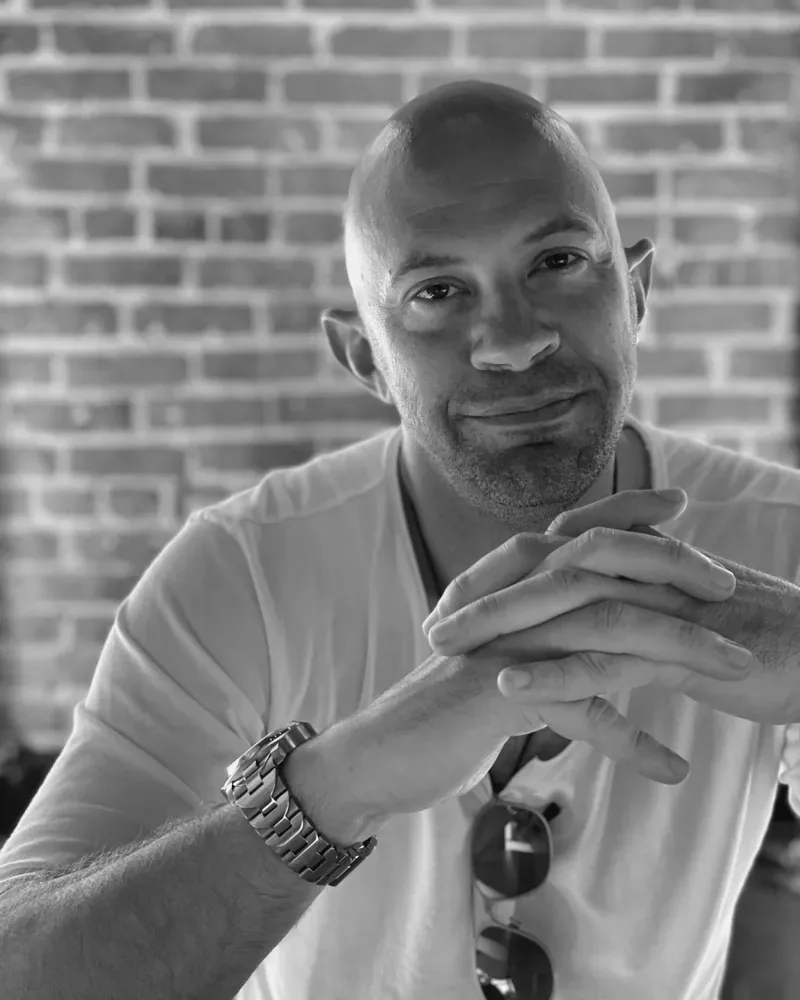
Founder
Adam Grimm, M.A., ACC
M.A. Clinical Psychology | ICF Associate Certified Coach (ACC) | Completing doctoral studies in clinical psychology
Adam leads the assessments, training and coaching. He served 21 years in the U.S. Air Force, 13 of them in Explosive Ordnance Disposal (EOD), where he learned how people hold up under sustained pressure. He has spoken at the Hawaiʻi Behavioral Health and Wellness Convention and at the Hawaiʻi International Summit on Preventing, Assessing and Treating Trauma Across the Lifespan, hosted by IVAT. His clinical training shapes how the work is built. The service is coaching, training and consulting.

Director of Research
Sarah Combs, PhD, MPH, MSW
PhD Community Psychology | MPH, Columbia University | MSW | Associate Director, GATE program, Columbia Mailman School of Public Health
Sarah is a researcher with a PhD in Community Psychology who blends community research, public health and social work. Her research covers housing insecurity, reproductive health and well-being, using qualitative and participatory methods that keep people at the center of the work. At Pegasus Realm, she helps design how we measure, so our results hold up.
Questions
Common questions.
What does it cost?
Assessment, training and evaluation are scoped after a first call and priced in writing. For a smaller question or one topic, a single consulting hour is $250 plus a 1% booking fee, and if it turns into a bigger project, the $250 is credited toward it. It can be rescheduled or cancelled up to 24 hours ahead for a full refund. Phoenix Protocol for one person is $6,000. It has a six-month payment plan, shown in full on the Phoenix Protocol page.
Is it confidential?
Yes. In surveys and interviews, what one person tells us stays with us. Your organization sees patterns across groups, and we only report on groups big enough that no one can be picked out. In Phoenix Protocol, the employer gets attendance and, when the program ends, an exit interview report that the person reads and approves first. Scores, answers and what is said in sessions stay private.
What do we get to keep?
The report, the group results and the measures, ready to repeat when you want to see what changed. Individual answers stay with us, which is why people answer honestly.
Can we use the results in a grant application?
Yes. The report shows how the numbers were gathered, so a board or a funder can follow it. If a grant is the goal, tell us at the start, so the measures match the outcomes you promise.
Is this therapy, or a replacement for our EAP?
No. This is training, consulting and coaching. It is not used for diagnosis or therapy, and it works alongside your EAP and health benefits, not instead of them.
Do you work in person?
Yes. In person on Oʻahu, elsewhere by arrangement, or online from anywhere.
Do you work with government and public agencies?
Yes. Pegasus Realm LLC is a certified Service-Disabled Veteran-Owned Small Business (SDVOSB).
What if what we need is outside your expertise?
We will tell you, and help you find someone who fits.
It feels off for a reason. Let’s find out why.
Tell us what you are seeing. The first call is free, and there is no obligation.
After you pick a time, Adam approves it personally. On the call we skip the long backstory and talk about what is going on now. No pitch.